
Pregnant people may experience a variety of gaps and barriers to care when accessing abortion.
General information intended for broad audiences isn’t always inclusive or applicable to our real lives.
People of different identities and those living through particular realities may face specific and often, dangerous obstacles in seeking care.
We affirm that every person deserves room to make their own decisions about their bodies and lives, AND know that is not always realistic.
Below, we provide more detailed information about accessing abortion that may be helpful for:
- People Who Are Incarcerated
- People Experiencing Violence
- Active Members of the Military, Those Who Access Care Through Veterans Affairs, and/or Those with Military-Issued Insurance
- Trans and Gender Non-Conforming People
- People Who Are Immigrants, Refugees, and/or Undocumented
- People With Disabilities
- People Who are Substance Using or May Have a History of Addiction
- Young People

PEOPLE WHO ARE INCARCERATED
For people who are incarcerated, getting access to abortion and other related services is often challenging. While access to healthcare is constitutionally protected for people who are incarcerated, it can be really difficult, or even impossible, to actually get an abortion.
State and County Facilities
In practice, New Mexico’s state prison system and sometimes county jails are supposed to administer a pregnancy test during intake, and then inform the person of their pregnancy status. Like other healthcare services that should be offered to people who are incarcerated, whether someone gets needed healthcare services depends largely on where they are incarcerated.
If a person who is incarcerated is pregnant, they should be able to request an appointment to discuss their pregnancy and pregnancy options with a provider. If a pregnant person decides to have an abortion, they should be taken to an outside clinic/provider. If the person who is incarcerated is detained in a county jail or state prison, there should be no cost to the patient for this care.
Federal Facilities
For those incarcerated in a federal facility (federal prison or U.S. Immigration and Customs Enforcement [ICE] Detention), the Hyde Amendment prohibits the use of federal dollars to pay for abortion and abortion-related services. In theory, there are exceptions if a pregnancy is the result of rape, incest, or if the pregnant person’s life is at risk, but the legal steps to prove those circumstances will likely be a barrier to getting a timely abortion.
If paying for your abortion is a barrier, you or someone you trust can reach out to a local abortion provider or abortion fund to find out if you qualify for financial assistance.

All Facilities
If someone is denied an appointment to talk with a provider about their pregnancy options or access to an abortion, it may be helpful for them, or their trusted contacts, to seek legal representation. A legal representative or attorney may facilitate the process of receiving a medical furlough. If your attorney is having a hard time getting you the care you need, there may be support from organizations like the ACLU of New Mexico to help explore other legal avenues. An incarcerated person and their trusted contacts may also consider connecting with advocacy groups, like Bold Futures, that could potentially draw attention to their urgent need for abortion. It’s important to note that these efforts will likely compromise the pregnant person’s privacy within the correctional system and greater communities.
Sexual Violence and People Who Are Incarcerated
Federal, state, and local detention centers in New Mexico are obligated to prevent sexual violence in facilities, but many incarcerated people still face sexual violence. Each prison has a designated Prison Rape Elimination Act (PREA) Compliance Manager. This person is responsible for investigating allegations of sexual assault or harassment, whether the alleged perpetrator is a person who is incarcerated or staff. The Compliance Manager is required to confidentially connect the person who is incarcerated and experiences sexual violence to a PREA advocate at a nearby rape crisis center.
In 2020, 163 reports were filed statewide. At the end of the year, a full third of those cases were still under investigation, and only 10 allegations were found credible by the New Mexico Corrections Department investigator. Being told that your claim is “unsubstantiated” doesn’t mean that you were not raped or harassed. It simply means that the facility was not able, or did not try hard enough, to get evidence to support your claim.
A person who is incarcerated and believes their claim is being minimized or discounted can ask a trusted contact to reach out to the PREA Advocate at the rape crisis center closest to the prison for assistance. If a person who is incarcerated is raped and the rape results in a pregnancy, the incarcerated person still has the legal right to an abortion. If they are denied access to an abortion, they should reach out to a private attorney immediately, even if they do not have money. In some cases, if a judge orders the agency with custody of an incarcerated person to provide an abortion, the judge may also order the agency to pay the legal fees of the person who is incarcerated. If the pregnant person has suffered further harm as a result of the agency’s inaction, they may be entitled to compensation.
Efforts to seek an abortion while incarcerated may compromise the pregnant person’s privacy and wellbeing within the correctional system and greater communities. There may also be significant harm in a pregnant person not getting the abortion they want or need. We trust each person will weigh their own decisions, considering potential harms and possibilities in their lives.
People Experiencing Violence
Whether someone became pregnant as a result of sexual violence, intimate partner violence, or is navigating different types of violence (including emotional control or other unsafe situations), abortion should be available to them.
The impacts of controlling and violent partners, trauma, and navigating multiple systems are real.
Contact your local intimate partner / domestic violence program or sexual assault service program for free and confidential emotional support services, including advocacy and counseling.
People experiencing violence are often kept from making their own decisions about their bodies and lives, and often face difficulty in accessing abortion.
If you seek care with a provider, you can have a conversation with them, so they know your safety concerns and practice extra precautions in their communications with you. For example, you can ask that they don’t call or text you, or leave messages on your phone, but instead wait for you to reach out.
If you are being pressured into having an abortion and can find a way to tell the provider/clinic staff you don’t want an abortion, they are trained to listen and stop moving forward.
Some perpetrators may try to keep those they are harming from accessing abortion, while other perpetrators may try to force a pregnant person to get an abortion they do not want.
Pregnant people in violent relationships or who experience sexual assault also face coercion and control. You still have the legal right to access abortion; only you can decide if an abortion is right for you.
If you use an internet search to find a provider or resources like this one, make sure to close the page and clear your browsing history. For more on digital safety, see Hackblossom’s Guide or The Digital Defense Fund’s quick tips.
Pregnancy as a Result of Sexual Assault
People who become pregnant as a result of sexual assault make a range of decisions about their pregnancies. All of these decisions are valid.
Some people who experience sexual violence seek care and support at a Sexual Assault Service Program / Rape Crisis Center. Some get a Sexual Assault Nurse Exam, while others decide to report to law enforcement. Others may decide not to share with anyone because of safety concerns or other reasons.
For people who decide to seek care, going to a local Sexual Assault Service Program can be one of your best options. Their providers and staff are specifically trained to care for people who have experienced sexual violence. Sexual Assault Service Programs / Rape Crisis Centers are designed to protect your privacy, confidentiality, and safety to the best of their ability. Sexual Assault Nurse Examiners are nurses specifically trained in providing care after a sexual or physical assault. Their first priority is to provide healthcare after an assault to ensure you are safe, as well as collect forensic evidence should you choose to report. Depending on the timing of the assault and when you seek care, they can provide emergency contraception (the morning after pill or copper IUD), as well as sexually transmitted infection testing and prevention medication. They can also provide referrals for pregnancy testing, abortion, and a range of pregnancy care options.
Note: If someone decides not to or cannot access a Sexual Assault Service Program / Rape Crisis Center, a hospital can be an option to get a Sexual Assault Nurse Exam. However, they may be charged for the exam and medical services provided, even if they have insurance.
If you need assistance with costs related to the violence you survived, you can contact the Crime Victims Reparation Commission (CVRC) for support.
Even if several days have passed since the assault and it’s no longer possible to collect DNA evidence, you can still get a Sexual Assault Nurse Exam by a trained professional. These examiners are trained to support survivors of sexual assault and violence.
Regardless of when you reach out, a Sexual Assault Service Program / Rape Crisis Center will offer you access to a sexual assault advocate who can answer your questions, and provide you with additional information. Various programs exist to support your needs.
If someone has already decided to report to law enforcement or wants to keep that option available, a Sexual Assault Nurse Exam can be important for collecting possible evidence.
If a person decides to report rape or other sexual violence to law enforcement, they can be taken for a Sexual Assault Nurse Exam if the person chooses.
For more information on accessing care after experiencing sexual violence, contact the New Mexico Coalition of Sexual Assault Programs.
Pregnancy and Intimate Partner / Domestic Violence
If you or someone you know is experiencing intimate partner violence, you may want to consider reaching out to an intimate partner / domestic violence program for support and resources. You deserve to access the care and services you want and need without the threat of violence.
For more information, contact the New Mexico Coalition Against Domestic Violence.
Young People
Note: Adults in New Mexico, including healthcare providers and staff, are obliged to follow mandatory reporting laws related to minors having sex* with adults or experiencing sexual violence before they reach legal age of consent. In New Mexico, 17 is the legal age of consent.
In New Mexico, people over the age of 13 are legally protected in seeking reproductive healthcare (including abortion and contraception) and mental/behavioral healthcare in a confidential setting and without parental notification or consent.
In order to access sexual assault or intimate partner violence support and services, it is likely your parents will be notified.
For more information on young people accessing abortion care, see Young People.
*We acknowledge that people become pregnant from consensual sex and non-consensual sexual violence. In this guide, we refer to the sex act that resulted in a pregnancy as sex.
ACTIVE MEMBERS OF THE MILITARY, THOSE WHO ACCESS CARE THROUGH VETERANS AFFAIRS, AND/OR THOSE WITH MILITARY-ISSUED INSURANCE
For those who typically get their healthcare at a military medical facility or Veterans Affairs (VA) clinic/hospital, these places may be where you have your primary and specialty care providers and where you might seek initial consultation for pregnancy. While your facility may provide pregnancy testing, under the Hyde Amendment, they are not allowed to provide abortion unless the pregnancy is a result of rape, incest, or if the pregnancy endangers your life (see Hyde Amendment). Unfortunately, many medical military facilities and VA facilities are not set up to provide abortions even under those circumstances.
This means that people in the military or those who access care through the VA will generally need to go outside of the military healthcare systems for abortion care. The cost of an abortion will most likely be an out-of-pocket expense.
Anti-abortion congresspeople have put the Hyde Amendment in every federal spending budget since 1976. The Hyde Amendment prohibits federal dollars from being used for abortion unless the pregnancy is a result of rape, incest, or it endangers your life. These federal bans on coverage continue to impact abortion care through military medical facilities and the VA.
Additionally, military insurance (TRICARE) for service members and their families (dependents) does not cover abortion or abortion-related services because of the Hyde Amendment.
The only exceptions are if the pregnancy is the result of rape, incest, or if a pregnant person’s life is at risk.
In order to qualify for an abortion under one of the listed exceptions through the military medical facilities, the VA, or military insurance for a pregnancy as a result of sexual violence, you must be prepared to report and have the rape or incest documented by your medical provider within 60 days of the incident. The process of reporting violence against you may be emotional, challenging, or even dangerous. The steps to secure an exception through this system will likely add time to you getting an abortion. It may be helpful to seek culturally appropriate counseling services, support from your close circle of loved ones, and if necessary, to seek out a place of safety. If this is something you can’t report or decide not to share, you will not be able to access an abortion through the military medical facilities, the VA, or military insurance.
Though the reason for your exception is supposed to remain private, the documentation related to your abortion will remain in your medical file.
We know that many people in the military experience sexual violence within this system, including at the hands of their fellow service members. If people in the military experience sexual violence / rape and become pregnant, there is a possibility they will not be informed of their right to an abortion. This information may be withheld at the discretion of medical and non-medical military leadership, staff, or personnel for varying reasons. Though there may be significant barriers to care, people in the military have the legal right to abortion.
People with Disabilities

Many people with disabilities face significant barriers to accessing necessary healthcare, including abortion. Prevailing misconceptions about the sexual needs of people with disabilities and intersecting stigmas surrounding reproductive healthcare add to these barriers. People with disabilities have the legal right to access abortion and abortion-related services.
The Americans with Disabilities Act of 1990 mandates that all healthcare facilities provide services that “meet essential eligibility requirements, with or without accommodations.” This means abortion facilities must see and provide care to people with disabilities, but may not have adequate equipment, materials, or communication aids on-site to do so correctly. Additionally, providers may lack the training and/or skills to properly advise or provide care to people with particular disabilities (Reproductive Rights and Access to Reproductive Services for Women with Disabilities). If you are a person with a disability, you deserve access to timely, compassionate, high-quality abortion care that meets your specific needs.
People in Guardianships
The role of guardians in medical decision-making varies greatly. If a medical provider thinks someone can make their own medical decisions, they likely will not question if the person has a guardian.
People in guardianships and guardians have very different relationships as well. Some can be hands-off, and others are very involved.
If you have a guardianship order that includes medical decision-making, reproductive health and abortion may not be explicitly named but is most likely included. Historically, this has been used to prevent disabled people from becoming pregnant or carrying a pregnancy to term.
Language Access
Language access is a challenge in many healthcare institutions. However, interpretation for patients who speak languages other than English and have limited English proficiency is required under the Affordable Care Act, and Title VI of the Civil Rights Act.
Title VI requires any institution that receives federal dollars to provide interpretation as requested, at no additional cost to the patient. This includes private providers who accept Medicaid or Medicare as a form of payment. People that speak languages other than English, and those with limited English proficiency have the right to receive a no-cost medical interpretation when receiving care at an institution that receives federal funding. If you feel more comfortable bringing your own interpreter, such as a friend or loved one, you have the right to do so.
New Mexico law prohibits discrimination in places of public accommodation, like private medical providers. Denying medical services to an individual who does not speak English would violate state law.
For more on Abortion and Disability Justice, check out this great information from We Testify, an abortion storytelling project.
For more on abortion care for people with disabilities, check on this resource from the National Partnership for Women and Families and the Autistic Self Advocacy Network.
If you have concerns about your care or treatment within healthcare systems in New Mexico, you can contact Disability Rights New Mexico.
People who are Refugees, Immigrants and/or Undocumented
People in New Mexico have the right to access abortion and other types of reproductive healthcare regardless of their immigration status. Immigrants, refugees, and/or undocumented people may face additional stigma, fear of criminalization, and language barriers, which can all affect the ways they are able to access abortion.
While these barriers exist, many providers in New Mexico serve immigrant communities across their healthcare needs.
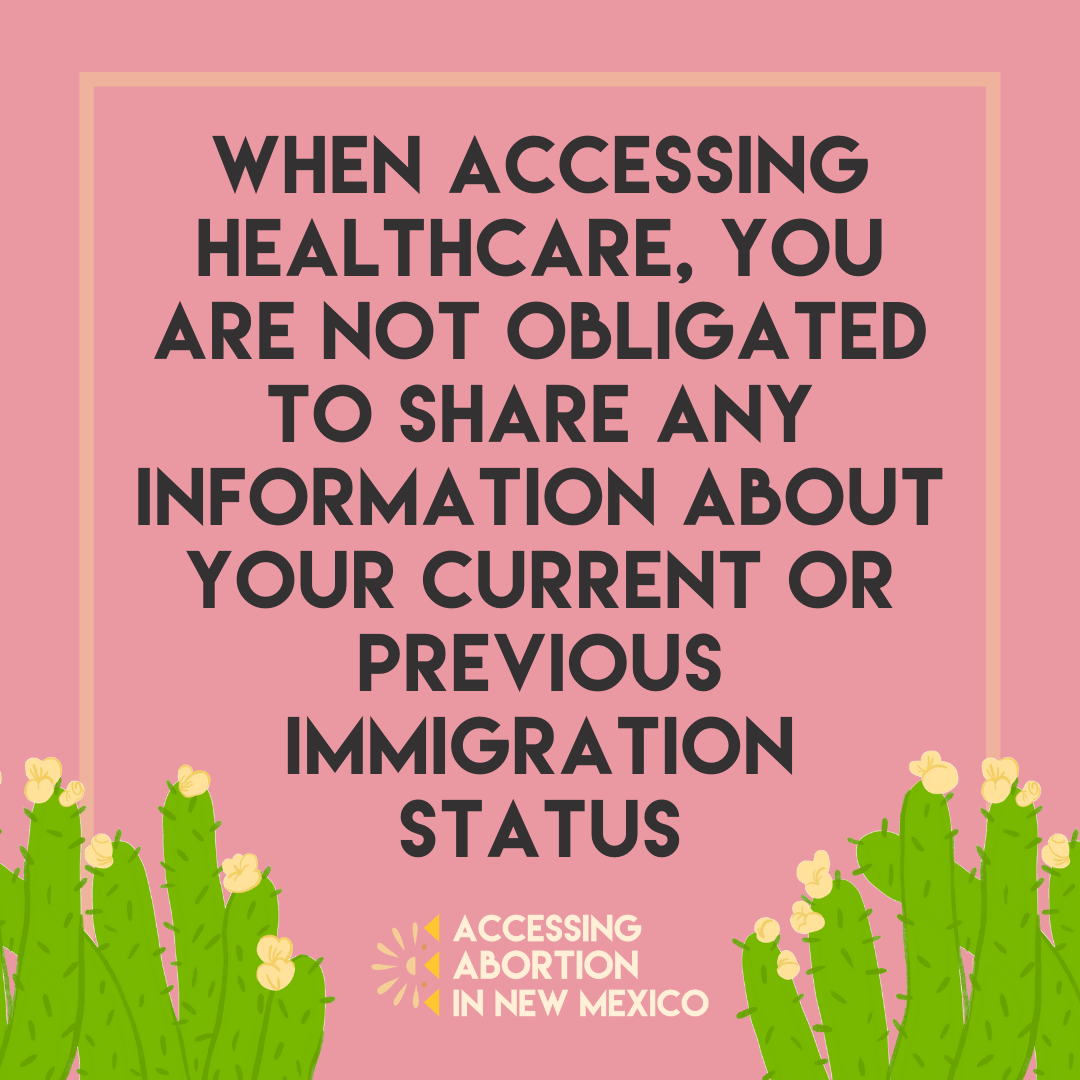
While healthcare providers shouldn’t ask questions about your legal status, some might. In healthcare settings, you have the right to decide who, if anyone, you share this personal information with.
Photo identification is a common, regulatory requirement at most medical institutions. Some abortion clinics may require photo identification to get care, while others don’t. For example, at Planned Parenthood clinics in New Mexico, undocumented people and others can access care without photo identification. In some cases, healthcare clinics require that those without photo identification pay in cash at the time of the appointment.
Medical information, like whether you have had an abortion, is protected by the Health Insurance Portability and Accountability Act (HIPAA) of 1996. This means healthcare information and details about your medical care should not be shared with anyone or any agencies without your authorization.
New Mexico is home to the Mariposa Fund—a unique abortion fund that offers financial support to undocumented people seeking abortion.
Regardless of your immigration or documentation status, you deserve access to abortion if and when you need it.
New Mexico shares a southern border with Mexico. This means that the federal government can and does set up immigration checkpoints within 100 miles of the international border. There are several checkpoints located along different travel routes in the southern New Mexico borderlands.
TRANS**, GENDER NON-CONFORMING (GNC), AND GENDER-EXPANSIVE PEOPLE
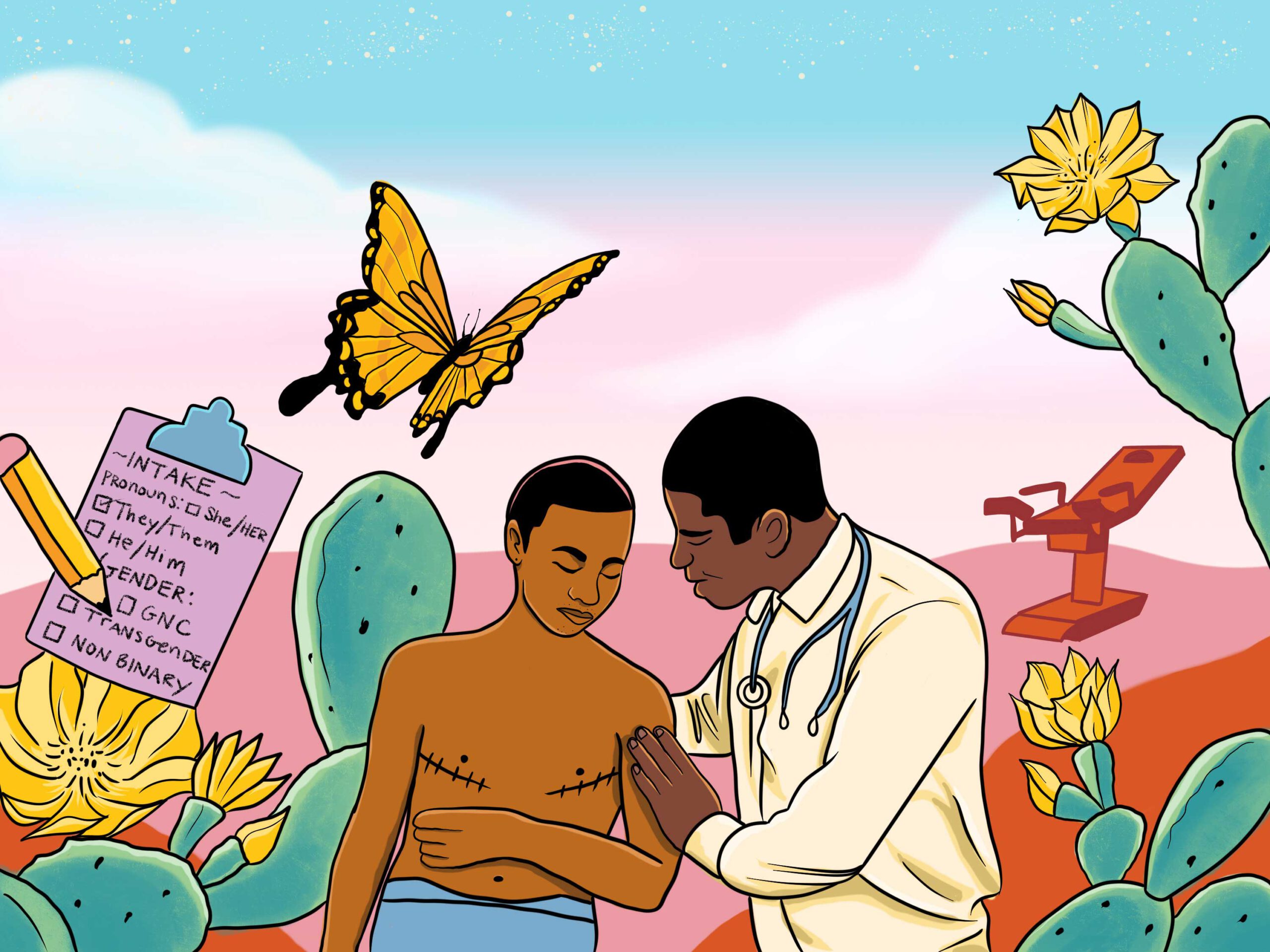
Trans** people often face barriers to accessing high quality and non-discriminatory reproductive healthcare they deserve. Reproductive healthcare is an area of medicine in which binary beliefs about sex and gender are still pervasive among care providers. As a result, many trans** people may avoid these settings until care is absolutely necessary.
Trans** people may experience the same or different types of stigma and discrimination within reproductive healthcare as they experience in other healthcare settings. While care can vary widely, some reproductive healthcare and abortion clinics offer reproductive and general healthcare services inclusive to trans** people. Some facilities have implemented gender inclusive intake forms including sections for gender options, names, and pronouns, and have staff trained in providing welcoming and affirming care, while others continue to focus on cisgendered women as their sole service population. Asking particular providers/clinics about their experience serving trans** people may be helpful as you continue your healthcare journey.
Trans** people may benefit from adding support people to their care team, such as abortion doulas, or loved ones who might be available to accompany them while accessing abortion care. It can be helpful to delineate boundaries around language and treatment prior to entering a care setting so that once care is initiated, there is less time and energy spent trying to create safety within a healthcare context that may not be ideal.
Trans**patients should expect to be asked detailed questions about their health history including questions about menstrual cycle history, HRT use, medical history and more. This information is used to help determine the safety and timing of abortion procedures. It is always ok to decline to give health history information that you are not comfortable sharing.

TransLash Media, a nonprofit organization and digital community made up of people who are committed to supporting trans/non-binary/intersex/two-spirit people through trans** stories to save trans** lives, just created an incredible new resource Trans Bodies, Trans Choices: My Abortion Saved My Life.
Additional resources for more information about gender-inclusive care:
LGBTQ People Need and Deserve Tailored Sexual and Reproductive Health Care
In New Mexico, many trans** people find support and build community at the Transgender Resource Center of New Mexico (TGRCNM). They also host a provider directory you can access here.
**In this section we will use the term Trans** to refer to a range of experiences that may include folks who identify as transgender, gender non-conforming, non-binary, two-spirit, and/or use other words to describe themselves within a gender-expansive experience. This section may also pertain to people who are intersex who may or may not identify as gender non-conforming.
People Who Are Substance Using or Have History of Addiction
We know that people who struggle with substance use and addiction face high levels of scrutiny and stigma. People living through cycles of substance use deserve support in pregnancy, parenting, and in accessing abortion.
As part of standard care, abortion clinics and care providers ask about and document a pregnant person’s detailed medical history to determine pregnancy timeline and abortion options. A medical history will likely include questions about prior pregnancies, substance and alcohol use, surgical history, as well as a list of medication and allergies. Laboratory testing may also be required or suggested. Additionally, drug testing may be requested by a provider. If a pregnant person declines lab testing, it may affect their ability to receive an abortion.
Depending on the type of abortion, pain medication and IV fluid may be used. If patients have concerns with particular medications being used during an abortion procedure or prescribed after an abortion, it’s a good idea to talk to the provider about your concerns and alternative treatment options.
Pregnant people have the right to withhold personal information such as past criminal charges and interactions with the Children, Youth, and Families Department (CYFD) or law enforcement officers.
Abortion is a healthcare decision, and is not a reason to report to CYFD or any other agency. However, like all adults in New Mexico, if healthcare providers or staff say they have a “reasonable suspicion” about the pregnant person and the safety of children in their care, they must report any safety concerns to CYFD. A report may spur an investigation by CYFD or law enforcement officers.
Young People

In New Mexico, people over the age of 13 are legally protected in seeking reproductive healthcare (including abortion and contraception) and mental/behavioral healthcare in a confidential setting and without parental notification or consent.
In New Mexico, if you are a minor over the age of 13, you have the right to get an abortion without approval from a parent/guardian. Our state has no requirements for parents or guardians to be notified or present for your abortion. It is your right to seek and receive these services, including abortion, when you need them.
Adults in New Mexico, including healthcare providers and staff, are obliged to follow mandatory reporting laws related to minors having sex* with adults, or experiencing sexual violence before they reach legal age of consent. In New Mexico, 17 is the legal age of consent.
*We acknowledge that people become pregnant from consensual sex and non-consensual sexual violence. In this guide, we refer to the sex act that resulted in a pregnancy as sex.
Young People In State Systems
If a pregnant person over the age of 13 is in foster care, the juvenile justice system, or otherwise in the custody of the state, they are still legally entitled to make a range of pregnancy-related decisions, including whether to have an abortion or to carry the pregnancy to term. Accessing care along a spectrum of decisions may still be very difficult or impossible.
If a young person in state custody is denied the chance to see a provider about their pregnancy options or access to an abortion, it may be helpful for them or their trusted contacts to seek legal representation.
If incarcerated, the young person may need to secure a medical furlough. A legal representative or attorney may facilitate the process of receiving a medical furlough. If your attorney is still having a hard time getting you the care you need there may be support from organizations like the ACLU of New Mexico to help explore other legal avenues. Many of the issues discussed in the section Abortion for Incarcerated People above, may apply to young people as well.
Any young person in state custody (and their trusted contacts) may also consider connecting with advocacy groups or their local legislators that could potentially draw attention to their urgent need for abortion. It’s important to note that these efforts will likely compromise the pregnant person’s privacy within child welfare systems and greater communities.